The cloud was supposed to be the future of AI. Instead, the future is quietly migrating back to your pocket. In 2026, on-device AI isn't just a niche optimization—it's becoming the default architecture for privacy-sensitive, latency-critical mobile experiences.
Why On-Device AI Matters Now
For years, the conventional wisdom was simple: AI models are too large, too compute-intensive, and too power-hungry to run on mobile devices. Send the data to the cloud, let the servers do the heavy lifting, and return the results. It worked—mostly.
But cracks in this model have been showing. Privacy regulations like GDPR and CCPA made data residency a legal nightmare. Network latency made real-time interactions frustrating. And the cost of API calls at scale became a significant line item on every startup's balance sheet.
According to recent analysis from Cmarix, on-device AI development with frameworks like Flutter now enables machine learning capabilities directly on the user's device—eliminating cloud dependencies, data transmission concerns, and latency issues entirely.
"The result is sub-millisecond response times, full offline capability, and privacy by default, since sensitive data never leaves the device. This is the architectural backbone behind Apple Intelligence and Gemini Nano."
— Mobile Development Trends Report, 2026
The shift isn't just technical—it's philosophical. Users are increasingly aware of where their data goes. Apps that can promise "your data never leaves your device" have a competitive advantage that no cloud-based feature can match.
The Hardware Revolution
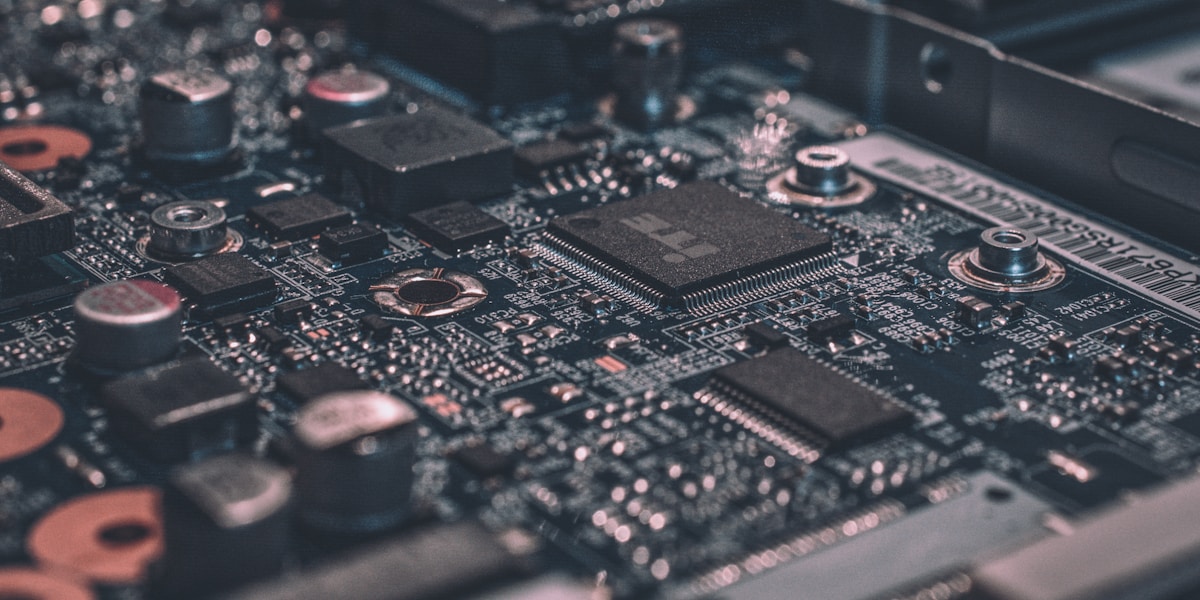
On-device AI wouldn't be possible without dedicated neural processing hardware. Apple led the charge with the Neural Engine, introduced in the A11 Bionic and significantly enhanced in subsequent generations. Today, as noted by industry analysts, Apple Silicon chips present in iPhones since the A14 include dedicated neural engines capable of running billions of operations per second.
Google's response came in the form of Tensor chips in Pixel devices, following a similar architecture. And Google's Gemini Nano model, specifically designed for on-device deployment, represents where this trend is heading as of 2026.

Key Hardware Players
- Apple Neural Engine (ANE) — Integrated into A-series and M-series chips, optimized for Core ML
- Google Tensor Processing Units (TPU) — Custom silicon in Pixel devices for on-device ML
- Qualcomm Hexagon DSP — AI acceleration across Android flagship devices
- MediaTek NeuroPilot — AI platform for mid-range and flagship smartphones
- Samsung NPU — Neural processing units in Galaxy devices
As detailed by hardware analysts, heavily quantized, smaller versions of large language models (3–13B parameters) can now run on flagship neural engines. Apple Intelligence and Samsung Galaxy AI both use this approach, enabling sophisticated AI features without cloud dependency.
Frameworks and Tools
The tooling ecosystem for on-device AI has matured dramatically. Developers no longer need to be machine learning experts to deploy neural networks on mobile devices.
TensorFlow Lite
TensorFlow Lite remains the dominant framework for cross-platform on-device ML. It's a deep learning framework specifically designed for on-device inference, allowing developers to train and deploy machine learning models on mobile and IoT devices across Android, iOS, Edge TPU, and even Raspberry Pi.
Google has recently evolved this into LiteRT—the next generation of the world's most widely deployed machine learning runtime. According to Google, it powers the apps you use every day, delivering low latency and high privacy on billions of devices.
Core ML
For iOS developers, Apple's Core ML provides deep integration with the Neural Engine. Models can be converted from TensorFlow, PyTorch, or other frameworks and optimized for Apple's hardware. The result is maximum performance with minimal battery impact.
PyTorch Mobile
PyTorch Mobile offers flexibility for researchers and developers who want to deploy models trained in PyTorch directly to mobile devices. It supports both iOS and Android, making it a popular choice for cross-platform development.
ONNX Runtime
For developers working across multiple platforms, ONNX Runtime with DirectML provides a unified runtime for Windows, AMD, and Intel NPUs—enabling model deployment across the entire spectrum of edge devices.

Real-World Use Cases
On-device AI isn't theoretical—it's already powering features in apps you use every day. Here are the patterns that are working:
1. Real-Time Image Processing
Filters, effects, and enhancements that once required server-side processing now happen instantly. Snapchat's lenses, Instagram's filters, and countless photo editing apps use on-device neural networks to process images in real-time.
2. Voice Recognition and Synthesis
Voice assistants that work offline. Dictation that doesn't send your audio to the cloud. Real-time translation that functions in airplane mode. These features are now possible thanks to compressed speech models running locally.
3. Predictive Text and Smart Replies
Your keyboard's next-word suggestions, smart reply options, and grammar corrections increasingly run on-device. The models are smaller, but the privacy and latency benefits are significant.
4. Health and Fitness Tracking
Fall detection, activity recognition, and health monitoring all rely on on-device ML to process sensor data in real-time. Sensitive health data stays on the device by design.
5. Privacy-First Content Moderation
Apps can scan for inappropriate content, detect scams, or filter spam without sending user messages to external servers. This is particularly important for messaging apps and social platforms.
As edge AI researchers note, tools like TensorFlow Lite and PyTorch Mobile allow developers to convert and optimize models specifically for mobile deployment—opening up these use cases to any development team.
Implementation Challenges
Despite the advances, on-device AI isn't without its challenges. Here's what we've learned from shipping production features:
Model Size vs. Performance
The biggest constraint is storage. A 100MB model might be trivial for a server, but it's significant on a device with limited storage. Quantization, pruning, and knowledge distillation are essential techniques for reducing model size without sacrificing too much accuracy.
Battery and Thermal Constraints
Neural engines are efficient, but they're not free. Sustained inference can drain battery and cause devices to heat up. Smart batching, adaptive quality, and background processing limits are necessary for a good user experience.
Device Fragmentation
Not all devices have neural engines. Not all neural engines are created equal. Building fallback strategies for older devices is essential—either by degrading gracefully to cloud-based inference or disabling AI features entirely.
Model Updates
Unlike cloud models that can be updated instantly, on-device models require app updates or sophisticated over-the-air model delivery systems. This adds complexity to the deployment pipeline.
Debugging and Monitoring
When models run on-device, you lose visibility into how they're performing. Building telemetry systems that respect privacy while providing debugging insights is a non-trivial challenge.
The Road Ahead
The trajectory is clear: on-device AI will become the default for an increasing range of use cases. Several trends are worth watching:
Federated Learning
Training models on-device without exposing user data. The model learns from local interactions, and only model updates—not raw data—are shared. This promises the benefits of collective intelligence without the privacy costs.
Multi-Modal On-Device Models
Models that can process text, images, audio, and video simultaneously—all locally. The first generation of these is already appearing in flagship devices.
AI-Native Apps
Applications designed from the ground up around on-device AI capabilities. Not apps with AI features, but apps that couldn't exist without local intelligence.
As industry observers note, autonomous AI agents that can take actions on behalf of users—booking, purchasing, scheduling—with minimal human input represent the next frontier. These agentic capabilities will increasingly run on-device for privacy and latency reasons.
Getting Started
If you're considering on-device AI for your app, here's a practical roadmap:
- Start with a cloud-based prototype — Validate that the AI feature actually solves a user problem before optimizing for on-device deployment
- Identify quantization opportunities — Most production models can be reduced to 8-bit or even 4-bit precision with minimal accuracy loss
- Choose your framework — Core ML for iOS-only, TensorFlow Lite for cross-platform, PyTorch Mobile for research-to-production pipelines
- Build fallback strategies — Plan for devices without neural engines and for when models fail
- Measure everything — Battery impact, inference latency, model download size, and user engagement
The best AI tools for mobile development in 2026 include not just ML frameworks like TensorFlow Lite, Core ML, and PyTorch Mobile, but also code assistants like GitHub Copilot X, Claude, and Cursor that can accelerate the implementation process.
On-device AI represents a fundamental shift in how we think about mobile intelligence. The cloud isn't going away, but it's no longer the only option. For privacy-sensitive, latency-critical, and offline-first experiences, the future runs locally. The question isn't whether to adopt on-device AI, but which features in your app are ready to make the transition.
References & Resources
- Why Flutter On-Device AI Development Is Key for Privacy Apps — Cmarix
- TensorFlow Lite | ML for Mobile and Edge Devices — Google
- LiteRT: High-Performance On-Device Machine Learning — Google AI
- AI Features in Mobile Apps: Complete Guide 2026 — Medium
- What Is a Neural Engine in 2026 and How Does It Work? — Artic Sledge
- Edge AI Explained: Running ML Models on Your Phone — Neural DeepLearn Academy
- On-Device AI Models: The Future of Private, Fast, and Local Intelligence — Nerd Level Tech
- Why AI-Powered Apps Are Rising: Opportunities & Challenges — Purshology
- How AI is Changing Mobile App Development in 2026 — Nadcab